
ECCV 2026 Workshop
Embodied Multimodal Reasoning
in Physical Environments
Date: Sep 9, 2026 · Location: Malmö, Sweden
About the Workshop
Robots eventually must operate in physical environments and perceive through multimodal sensing. Embodied reasoning is therefore critical as it must comprehend physical constraints and multimodal sensory inputs within the complex task contexts. Different from most studies on general multimodal understanding and reasoning, embodied AI scenarios introduce several unique challenges:
- Robot-centric multimodal reasoning: Reasoning must extend beyond human-centric modalities such as vision/text to incorporate robot-centric sensory modalities, including tactile, proprioceptive, and force feedback.
- Physically-grounded multimodal reasoning: Reasoning must proceed in a physically valid manner to ensure that plans and actions are executable.
- Interaction-oriented multimodal reasoning: Agents must interact with the environment and humans, which is inherently multimodal; modeling and understanding such interactions and their effects across modalities remain a fundamental challenge.
This workshop focuses on the design of multimodal reasoning for deployable embodied agents, with an emphasis on robot-centric, physically-grounded, and interaction-centric reasoning across embodied tasks such as navigation and manipulation. We encourage contributions that study how multimodal reasoning can be represented, updated, and evaluated under interactive scenarios considering robot-specific sensing modalities and realistic physical constraints across diverse application settings.
Topics:
Call for Papers
Topics
We invite submissions on topics including, but not limited to:
- Embodied Multimodal Reasoning
- Robotic Multimodal Reasoning
- Physically Grounded Reasoning
- Human-Centric Multimodal Reasoning
- Long-Horizon and Action-Conditioned Reasoning
- Embodied Navigation and Manipulation
- Evaluation and Benchmarks for Embodied Reasoning
- Multimodal Interaction, Grounding, and Planning
Important Dates
| Full-length Papers Submission | July 19, 2026 (23:59 AoE) | Loading... |
| Extended Abstracts Submission | July 24, 2026 (23:59 AoE) | Loading... |
| Notification | August 7, 2026 | Loading... |
| Final Version | August 14, 2026 | Loading... |
*All deadlines are Anywhere on Earth (AoE). Timelines are subject to change.
Submission Guidelines
We encourage two types of submissions:
- Full-length papers with proceedings. The work is limited to 14 pages (excluding references) and should follow ECCV Submission policies. Selection for inclusion will be determined by the paper's relevance, significance, novelty of findings, technical quality, and clarity of presentation. Accepted papers will be featured in the ECCV 2026 workshop proceedings.
- Extended abstracts (non-archived). We encourage submission of previously published work on relevant topics of the workshop as extended abstracts. The page limit is 4 pages (excluding references). These submissions will not be indexed or published in the proceedings. For authors who want to submit their accepted work at this workshop to a different journal or conference, please check their double submission policy.
Papers must adhere to the ECCV 2026 official template (by cloning the Overleaf Project), as per the main conference author guidelines. Each submission will undergo review by a minimum of two reviewers under a double-blind policy.
Challenge: VLNVerse
This workshop hosts an embodied challenge for assessing physically-grounded multimodal reasoning within realistic physical constraints. The challenge, VLNVerse, features embodied navigation where agents integrate perception, memory, and action-conditioned reasoning over long horizons.
Challenge Deadline: August 15, 2026 (23:59 AoE)
VLNVerse covers two navigation tasks evaluated under a unified environment and protocol:
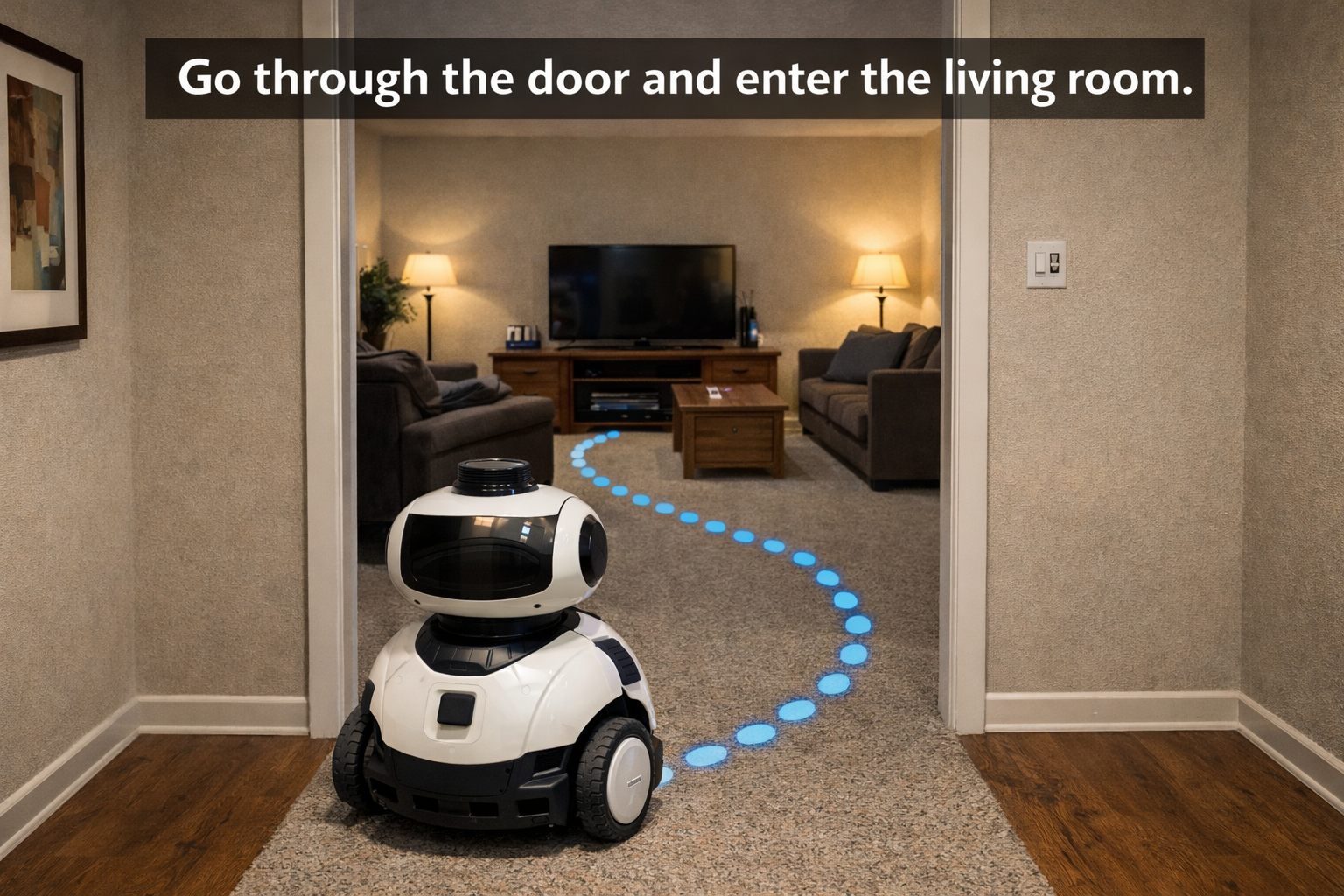
Vision-Language Navigation
Navigate following natural language instructions
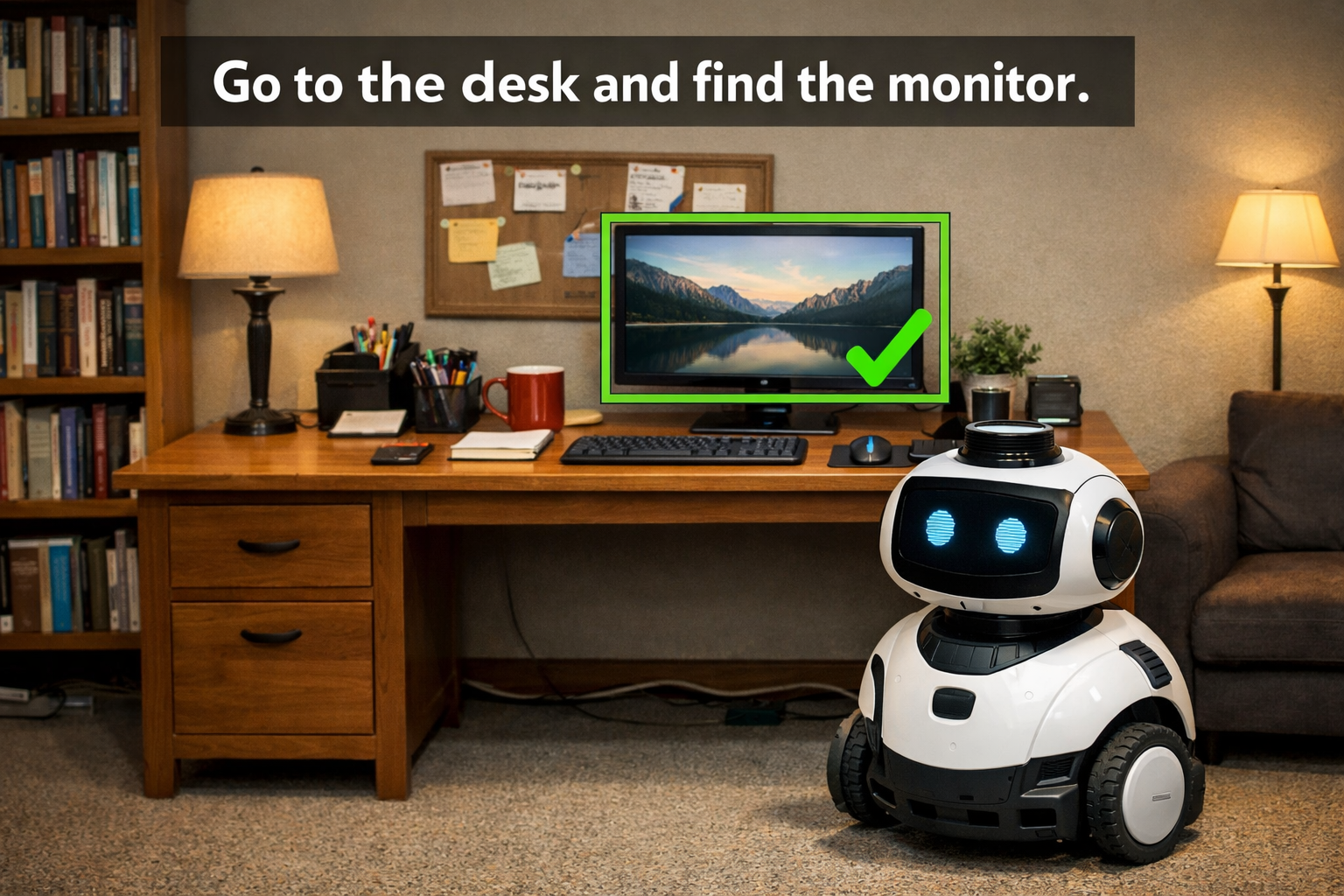
Object-Goal Navigation
Navigate to find target objects
Submissions are not restricted to a unified model family. Participants may use learning-based methods or MLLMs, and we also provide open-source baselines for reference.
Rankings will be determined by the average SR@3 across the two tasks, and results will be evaluated via the CodaBench platform and public leaderboards to support fair and standardized benchmarking.
Invited Speakers





Program
Sep 9th · All times are in Malmö, Sweden (CEST)
| Time | Start | End | Program | Speaker |
|---|---|---|---|---|
| 08:30-08:40 | 08:30 | 08:40 | Opening Remarks | |
| 08:40-09:20 | 08:40 | 09:20 | Invited Talk 1 | Marc Pollefeys |
| 09:20-10:00 | 09:20 | 10:00 | Invited Talk 2 | Jiajun Wu |
| 10:00-11:00 | 10:00 | 11:00 | Coffee Break | |
| 11:00-11:40 | 11:00 | 11:40 | Invited Talk 3 | Katerina Fragkiadaki |
| 11:40-12:00 | 11:40 | 12:00 | Sponsor Talk | |
| 12:00-13:45 | 12:00 | 13:45 | Lunch | |
| 13:45-14:25 | 13:45 | 14:25 | Invited Talk 4 | Yuke Zhu |
| 14:25-15:05 | 14:25 | 15:05 | Invited Talk 5 | Andreas Geiger |
| 15:00-16:00 | 15:00 | 16:00 | Coffee Break | |
| 16:00-16:40 | 16:00 | 16:40 | Invited Talk 6 | Chuang Gan |
| 16:40-17:20 | 16:40 | 17:20 | VLNVerse Challenge Presentation | |
| 17:20-17:30 | 17:20 | 17:30 | Closing Remarks |
Organizers








Sponsors

Contact
For any inquiries about the workshop, please reach out via email:
- Shijie Li (Li_Shijie@a-star.edu.sg)
- Qi Wu (qi.wu01@adelaide.edu.au)